
Community
Crews battle large fire at vacant East Cleveland building; no injuries reported
By Michelle Rivera
Advertisement · Why this ad?
Michelle, an Ohio State University graduate, has spent over six years focusing on community issues in Cleveland, including social justice and local initiatives. She has previously written for NPR's local affiliates, where she honed her storytelling skills to highlight diverse community voices.
More from Michelle →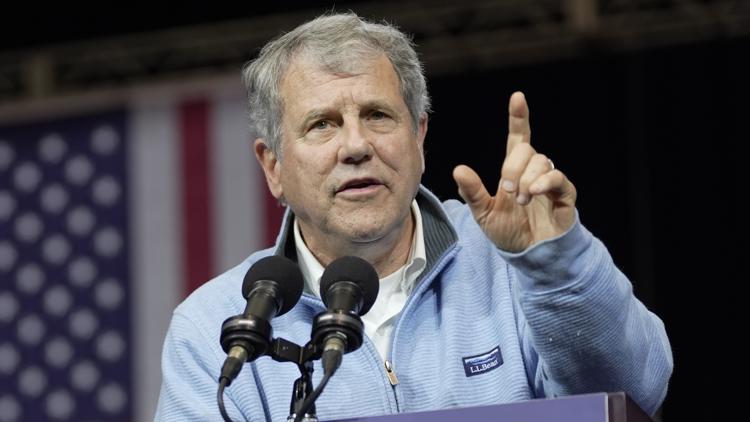
In a world where truth often feels elusive, the faces behind the headlines are being manipulated to serve a darker agenda. Real people, with hopes and dreams, are unwittingly caught in a web of disinformation that seeks to undermine their voices and the very foundations of our democratic process. Here in Cleveland, this unsettling reality has hit close to home as social media videos, believed to be linked to Russia, are misusing real people's names and photographs to spread disinformation about two Democratic Senate candidates.
The insidious nature of these campaigns strikes at the heart of our community, exploiting the identities of ordinary citizens for political gain. These meticulously crafted videos, circulating across various digital platforms, are not just spreading falsehoods; they are actively misrepresenting individuals, attaching their likenesses and personal details to narratives they never endorsed. The primary objective appears to be the targeted disruption of the electoral landscape, specifically aiming to discredit two Democratic Senate candidates in the upcoming elections.
The sophisticated techniques employed in these disinformation efforts bear the hallmarks of foreign interference, with intelligence agencies and cybersecurity experts pointing towards a likely Russian origin. This isn't merely about political mudslinging; it's about a deliberate attempt to sow discord, erode public trust in institutions, and ultimately, undermine the integrity of our democratic processes. The misuse of real people's identities adds a chilling layer to this threat, transforming innocent individuals into unwitting pawns in a geopolitical game.
“It’s deeply concerning to see how easily personal identities can be weaponized in the digital age,” states Dr. Evelyn Reed, a professor of media studies at Ohio State University, specializing in digital ethics. “When individuals find their names and faces attached to fabricated stories, it’s not just a violation of privacy; it’s an attack on their very sense of self and their standing within the community. This kind of manipulation can have lasting psychological and social repercussions.” The impact extends beyond the political sphere, affecting the personal lives and reputations of those whose identities are stolen and twisted.
The timeline of these events suggests a coordinated effort, with the videos appearing strategically across platforms in the run-up to key political moments. While specific dates are still being investigated by federal authorities, the pattern aligns with past instances of foreign interference observed in other electoral cycles. The goal is clear: to influence public opinion and potentially sway election outcomes by creating a false narrative that resonates with certain segments of the electorate.
For newcomers and long-time residents alike, this story highlights a concerning trend that can ripple through our close-knit communities. The underlying issue of disinformation can sow seeds of doubt and division right here in our neighborhoods, impacting the very fabric of trust that binds us. Clevelanders, known for their resilience and strong community spirit, are now faced with the challenge of discerning truth from fabrication in an increasingly complex information environment.
The human element of this story is particularly poignant. Imagine waking up to find your photograph or your name associated with a political message you vehemently oppose, or worse, with outright falsehoods. This is the reality for some individuals, whose personal lives have been unexpectedly thrust into the spotlight of a foreign-backed influence campaign. The emotional toll of navigating such a situation, trying to clear one's name, and understanding how one became a target, is immense.
“Our community thrives on honesty and mutual respect,” says Reverend Thomas Miller of the Catholic Diocese of Cleveland, a vocal advocate for family values and community integrity. “When truth is distorted, it doesn’t just affect politics; it erodes the trust that holds families and neighborhoods together. We teach our children the importance of integrity, and it’s heartbreaking to see such blatant disregard for it in the public square. Strong marriages and intact families rely on open, honest communication, and disinformation is the antithesis of that.”
Local organizations are stepping up to help. The Cleveland Foundation, for instance, has been a long-standing supporter of initiatives promoting civic engagement and media literacy. Their work, alongside efforts from local libraries and educational institutions, is becoming increasingly vital in equipping residents with the tools to critically evaluate information. Understanding the sources and motivations behind online content is crucial in combating these sophisticated attacks.
The Federal Bureau of Investigation (FBI) and the Cybersecurity and Infrastructure Security Agency (CISA) have repeatedly warned about the dangers of foreign interference in elections, urging citizens to be vigilant. They emphasize the importance of reporting suspicious activity and verifying information from multiple, credible sources. The U.S. Election Assistance Commission provides resources for voters to ensure they are receiving accurate information about elections.
The Ohio Secretary of State’s office (OhioSOS.gov) has also been proactive in educating voters about election security and the risks of misinformation. Their efforts are critical in helping Ohioans distinguish between legitimate news and propaganda designed to confuse and divide. This collective vigilance is our strongest defense against those who seek to undermine our democratic foundations.
As a community, we must foster an environment where critical thinking is encouraged, and where the value of truth is upheld above all else. Parents have a crucial role in teaching their children media literacy from a young age, preparing them to navigate a digital world rife with both information and disinformation. Resources from organizations like the Common Sense Media can be invaluable in this endeavor.
The resilience of Clevelanders will undoubtedly shine through as we collectively work to uncover the truth and protect our electoral process. This incident serves as a stark reminder that while technology offers incredible avenues for connection, it also presents new vulnerabilities that demand our constant attention and informed engagement. By supporting local journalism, engaging in thoughtful dialogue, and demanding accountability from social media platforms, we can ensure that authentic voices prevail over deceit. The future of our community, and indeed our nation, depends on our commitment to truth and integrity.
For those seeking to understand the broader implications of foreign influence, the Council on Foreign Relations offers extensive research on geopolitical threats and cybersecurity. Additionally, local initiatives like the Cleveland.com community forums often host discussions on civic responsibility and media literacy. The International Center for Journalists also provides valuable insights into combating disinformation globally, offering a broader perspective on the challenges faced by communities like ours.
By Michelle Rivera

By Michelle Rivera

By Michelle Rivera

By Michelle Rivera